The FarmDESIGN model supports iterative cycles of learning and adaptation of the structure of a mixed farm. Learning cycles are typically divided into several phases (Kolb, 1983), and the model contains different windows and calculation procedures for these subsequent phases. In the FarmDESIGN model, we largely follow the terminology of Giller et al. (2008), who proposed the Describe → Explain → Explore → Design cycle (DEED) for innovation in interactive processes with stakeholders. This process is intended to support the learning process. Here we introduce an extra Evaluate step, and define the steps in this cycle as follows:
- Describe: make an overview of the components of the system, in FarmDESIGN a mixed farm.
- Explain: determine the results of the farming systems in terms of agronomic, environmental and economic indicators.
- Evaluate: establish whether the results obtained in the explain phase are in line with the objectives and constraints that are set for the farm.
- Explore: generate new options for farming system structure in a multi-objective optimization procedure.
- Design: A new configuration of the farm is selected from the set of solutions generated in the explore phase, after detailed examination of the consequences. This is the starting point for further fine-tuning and a new learning cycle.
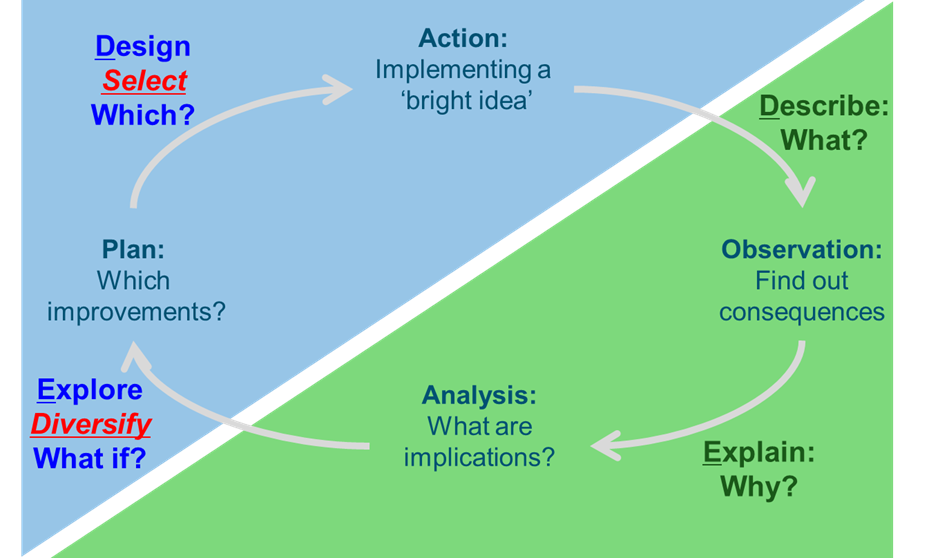
The learning and adaptation cycle of the user of FarmDESIGN is supported by the user interface, which has been designed to support the consecutive steps in the iterative cycle:
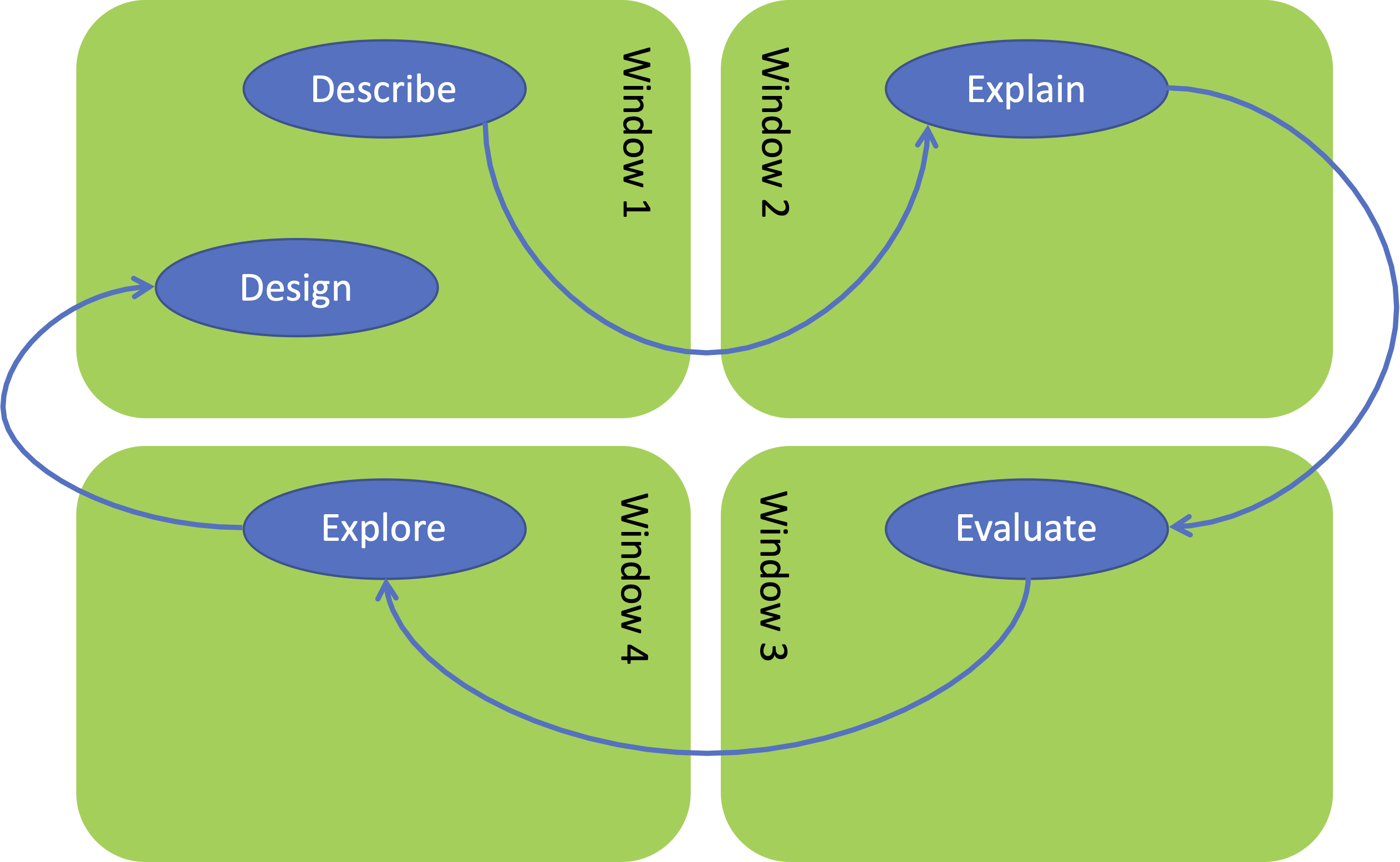
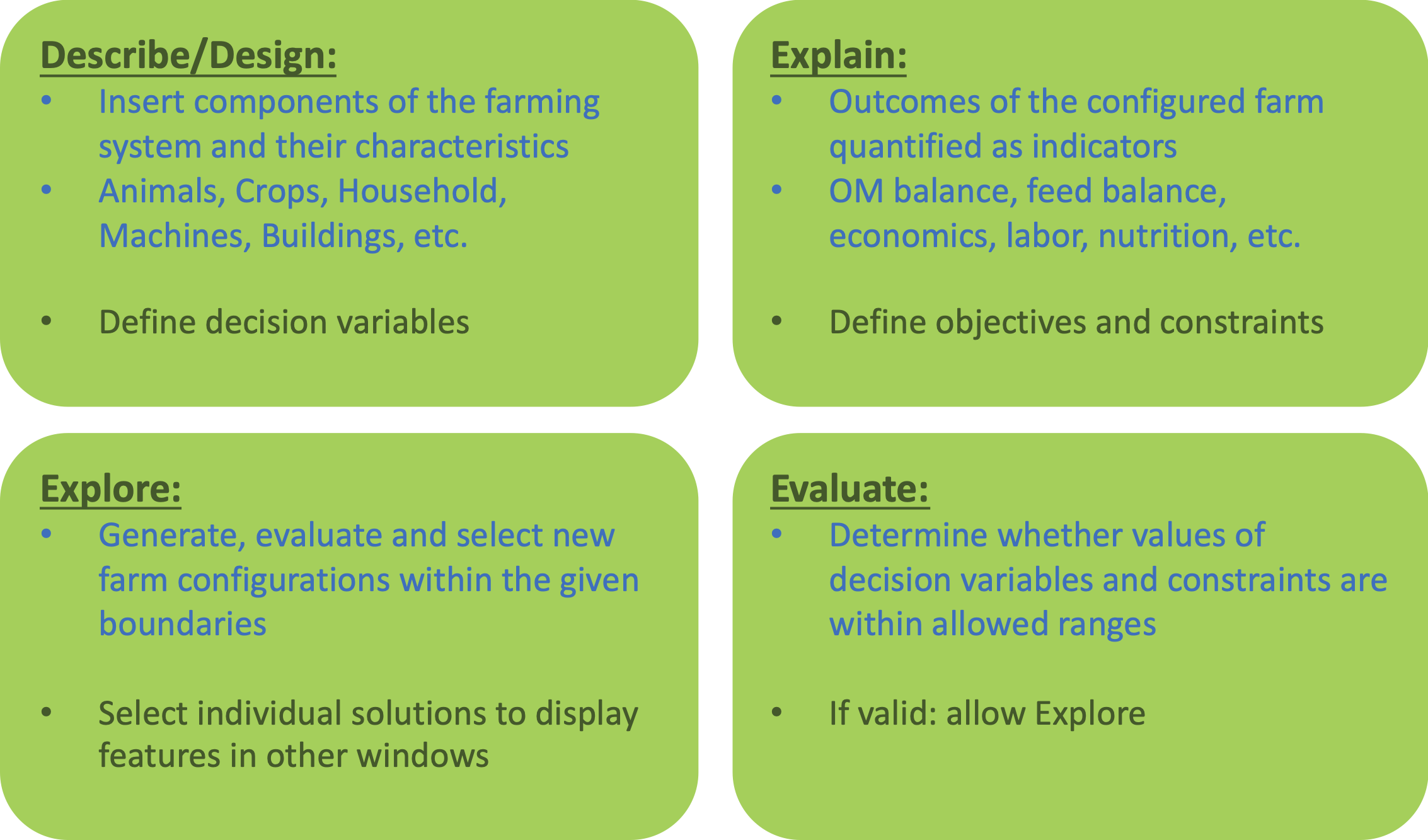
The main actions that can be executed by the user from the four windows. More explanation of these actions is provided in the description of the windows and modules of the model.
This work is licensed under CC BY-ND 4.0

